Article: What Is Alabaster? A Guide to Alabaster Lighting, Care and Cost

What Is Alabaster? A Guide to Alabaster Lighting, Care and Cost
Alabaster is a soft, fine-grained natural stone, most often a form of gypsum, that is translucent enough to let light pass through it. That is why it has been used for lamps and windows for centuries: when a bulb sits behind a thin alabaster shade, the whole stone glows with a warm, even light.
This guide explains what alabaster is made of, how it differs from marble, why every piece looks different, and how to choose and care for alabaster light fixtures at home or in a design project.
What alabaster is made of
The word covers two related minerals:
- Gypsum alabaster is a fine-grained form of gypsum (calcium sulfate). It is the type most people mean today, and the type most often carved into lamp shades.
- Calcite alabaster, sometimes called Egyptian alabaster, is a banded form of calcite (calcium carbonate). It was widely used in the ancient world for vases, jars and carvings.
Both share the qualities that matter for lighting: a fine, even grain, a creamy white to honey color, natural veining, and enough translucency to glow when lit from behind.
How soft is alabaster?
Gypsum alabaster is very soft, around 2 on the Mohs hardness scale, which means a fingernail can scratch it. That softness is what makes it possible to cut it into thin, round shades. It is also the reason it needs a little care: it scratches more easily than marble and it does not like water.
Alabaster vs marble
Lighting shops often use the two words together, and some shades are sold as "marble" when they are alabaster. The differences are real:
| | Alabaster | Marble |
|---|---|---|
| Mineral | Gypsum (or calcite) | Calcite or dolomite |
| Hardness (Mohs) | About 2 | About 3 to 4 |
| Translucency | High when cut thin | Low |
| Look when lit | Warm, glowing, veins show through | Mostly opaque |
| Water | Sensitive, keep dry | More tolerant |
For lighting, translucency is the deciding point. Marble is beautiful on a counter, but alabaster is the stone that turns into a soft lantern once the bulb is on.
Why every alabaster shade is unique
Alabaster is cut from natural blocks, so no two shades match exactly. Expect:
- Color variation, from milky white to cream and pale amber.
- Veining and clouds, which show more clearly when the light is on.
- Small natural marks, such as tiny pits or crystal lines.
These are part of the material, not defects. On a pair of sconces flanking a mirror or a bed, the two shades will be close but not identical. Most designers see this as the point: a natural material that reads as handmade.
Is alabaster expensive?
Alabaster lighting usually costs more than glass or fabric shades. The stone has to be selected, cut and shaped by hand, and thin, even shades take time and lead to waste when a block cracks. Prices also depend on the size of the shade: a small cylinder on a spotlight uses far less stone than a wide pendant bowl.
As a general guide, the cost difference makes the most sense in rooms where the glow is seen every evening: a bedroom, a hallway, a dining room or a bathroom vanity.
Where alabaster lighting works best
Alabaster gives a diffused, low-glare light, so it suits places where you want atmosphere more than task light.
- Bedrooms and bedside walls. A pair of alabaster wall sconces gives a soft light that does not shine in your eyes.
- Hallways and stairs. A row of small alabaster sconces turns a corridor into a warm, lantern-lit space.
- Bathrooms. Alabaster on either side of a mirror is flattering on skin. Check that the fixture suits the location, and keep it out of direct splashes.
- Dining and living rooms. Alabaster ceiling lights and pendants add a glowing focal point above a table or in the middle of a room.
- Accent spots. An alabaster spotlight softens a directional beam, a good option where a bare metal spotlight would feel too technical.
Browse the full alabaster lighting collection to compare shapes.
Pairing alabaster with brass
Alabaster and brass have been paired for a long time, and for good reason: the warm tone of the stone matches the warm tone of the metal.
- Antique brass gives a darker, aged contrast that suits traditional and vintage interiors. See our antique brass lighting.
- Raw or polished brass feels lighter and more modern next to the cream stone.
- Black or chrome gives a sharper, graphic look if the room needs contrast.
A few of our most popular alabaster designs:
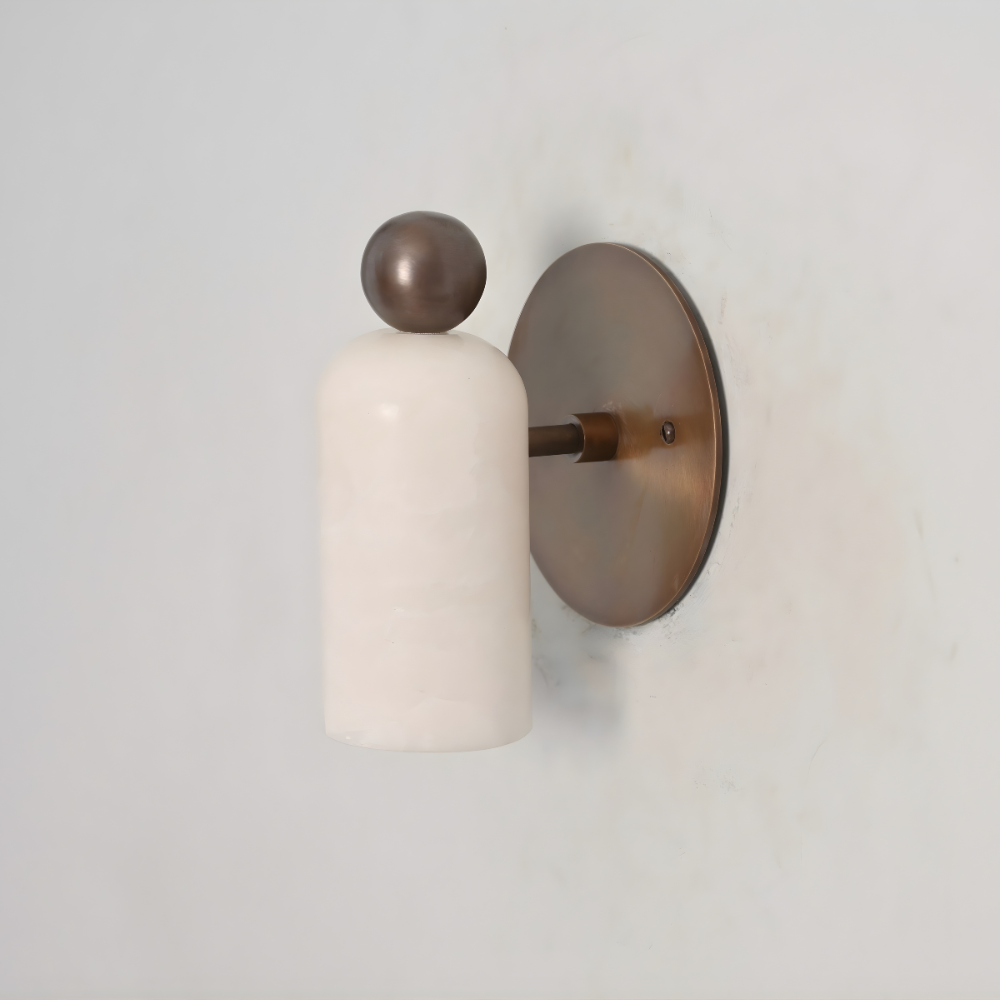
- Brass Ball Stub Arm Alabaster Sconce: a compact sconce for bedsides, hallways and mirrors.
- Brass Suspended Alabaster Sconce: the shade hangs from a brass arm, a lighter, more sculptural look.
- Adjustable Alabaster Spot Light: a ceiling spotlight with a stone shade.
Choosing bulbs for alabaster
The bulb decides how the stone looks:
- Warm white, around 2700K to 3000K, brings out the honey tones. Cooler light can make alabaster look gray.
- Low wattage LED is enough. Alabaster diffuses light, so a small LED bulb gives a soft glow. Our alabaster sconces use a compact G9 bulb, and the product page lists the recommended wattage.
- Dimmers suit alabaster well. With a compatible dimmer and dimmable bulbs, you can take it from reading light to night light.
How to clean and care for alabaster
Alabaster is easy to live with if you remember two things: it is soft and it does not like water.
- Turn the light off and let the bulb cool before touching the shade.
- Dust with a dry, soft cloth or a soft brush. This is all most shades need.
- Avoid water and liquid cleaners. Gypsum is slightly soluble, and water can leave dull marks.
- Never use abrasive pads or chemical sprays. They scratch or etch the surface.
- Handle the shade with clean, dry hands when changing a bulb, since skin oils can mark light stone.
If a shade gets a stubborn mark, a very lightly damp cloth, used briefly and dried at once, is the most you should try at home. For anything more, ask a stone restorer.
For installation, hire a licensed electrician, especially for hardwired sconces and ceiling fixtures.
FAQ
Is alabaster a stone or a mineral?
It is a natural stone, made mostly of the mineral gypsum, or in some cases calcite.
Is alabaster the same as marble?
No. Alabaster is softer and much more translucent. Marble is harder and mostly opaque, which is why alabaster is preferred for light shades.
Why does alabaster glow?
It has a fine, even grain and, when cut thin, lets light pass through, so the whole shade lights up instead of only the opening.
Can alabaster get wet?
It should be kept dry. Water can dull or mark gypsum alabaster, so dust it with a dry cloth instead.
Will my alabaster shades match exactly?
Close, but not exactly. Natural variations in color and veining are part of the material.
Specifying alabaster for a project?
Interior designers and architects can order alabaster sconces, pendants and spotlights in matched finishes, with custom sizes on request. Join our trade program for trade pricing and project support.